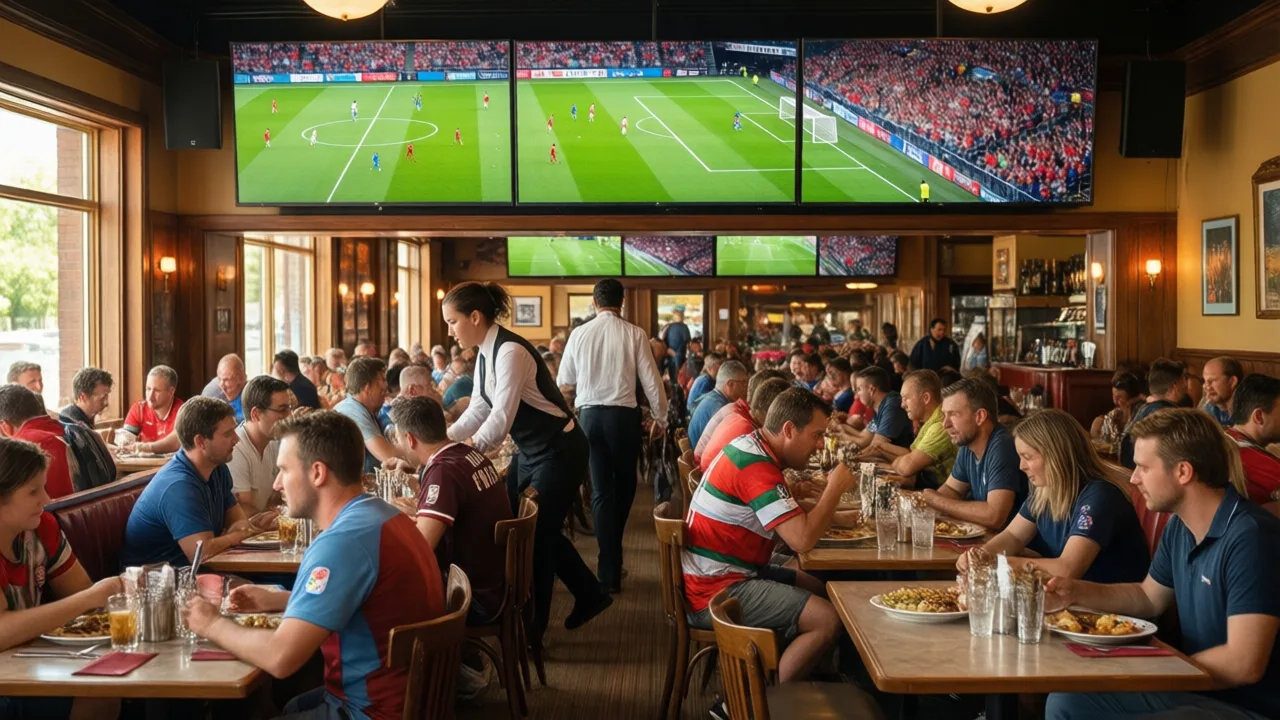
The World Cup 2026 Restaurant Rush: A Survival Playbook
Your POS misbehaving on a normal Tuesday is an annoyance. Your POS misbehaving during a World Cup quarterfinal is a mutiny — and this summer, every service is potentially a quarterfinal.
Why migrations spike after big events
Every match-day meltdown becomes a Monday-morning demo request. If your current system dropped offline during a surge, dumped tickets at halftime, or made you count cash while forty fans waited — that is the signal. The smart move is to survive the final rounds on what you have, then migrate in the quiet week after July 19 with the pain fresh and documented.
The biggest sporting event ever staged in North America
The 2026 FIFA World Cup runs June 11 through July 19 — 104 matches, 48 teams, and sixteen host cities: Atlanta, Boston, Dallas, Houston, Kansas City, Los Angeles, Miami, New York/New Jersey, Philadelphia, the San Francisco Bay Area and Seattle — plus Toronto, Vancouver, Mexico City, Guadalajara and Monterrey. We are now deep in the knockout rounds, and every restaurant within driving distance of a stadium, fan festival, or big-screen sports bar has felt what match day does to foot traffic.
Even outside host cities, watch parties move dinner demand into strange new windows. A 3pm kickoff on a Tuesday creates a lunch rush that never ends; a 9pm kickoff turns Sunday night into Saturday night. The operators winning this summer are the ones who re-planned staffing, inventory and technology around the match calendar instead of the weekly routine.
What match-day surges break first
- The phone line. Call volume doubles before kickoff — takeout orders, table questions, "are you showing the game?" Staff can't answer while running food. An AI phone agent such as KwickPhone answers every call, takes the order, and never puts a fan on hold.
- The order queue. Halftime creates a 15-minute compression where an hour of orders arrives at once. Kitchen display systems and order-ahead windows spread the load; paper tickets do not.
- Connectivity. Stadium-adjacent cell networks choke on match day. If your POS dies when the internet does, you lose the best hour of the summer. Offline-capable systems keep ringing sales.
- Staffing math. Knockout matches can run to extra time and penalties — 30+ unplanned minutes of full occupancy. Schedule closers accordingly.
A quick readiness checklist for the final rounds
- Print the remaining match schedule (quarterfinals through the July 19 final) and staff to it.
- Build a two-item "match special" menu that your kitchen can push out fast at volume.
- Turn on order-ahead and pickup time slots to flatten the halftime spike.
- Let an AI agent or overflow service catch the phone; every missed call this month is a missed table of four.
- After each match day, compare sales by hour against a normal week — the delta is your playbook for the 2027 events season.
Ready before the next kickoff?
KwickOS runs the whole floor — POS, kiosks, online ordering and reporting — and KwickPhone answers every call with AI. Want a proven standalone system? KwickPOS powers 5,000+ restaurants with cloud + offline hybrid POS.